When a CCTV drainage survey revealed damage and root ingress on a surface water line at a residential property, DALROD Nottingham were called in to investigate and resolve the issue.
What initially appeared to be a straightforward repair quickly developed into a much larger project after further inspection revealed the pipe had collapsed and was obstructed by concrete.
Initial Investigation and Root Clearance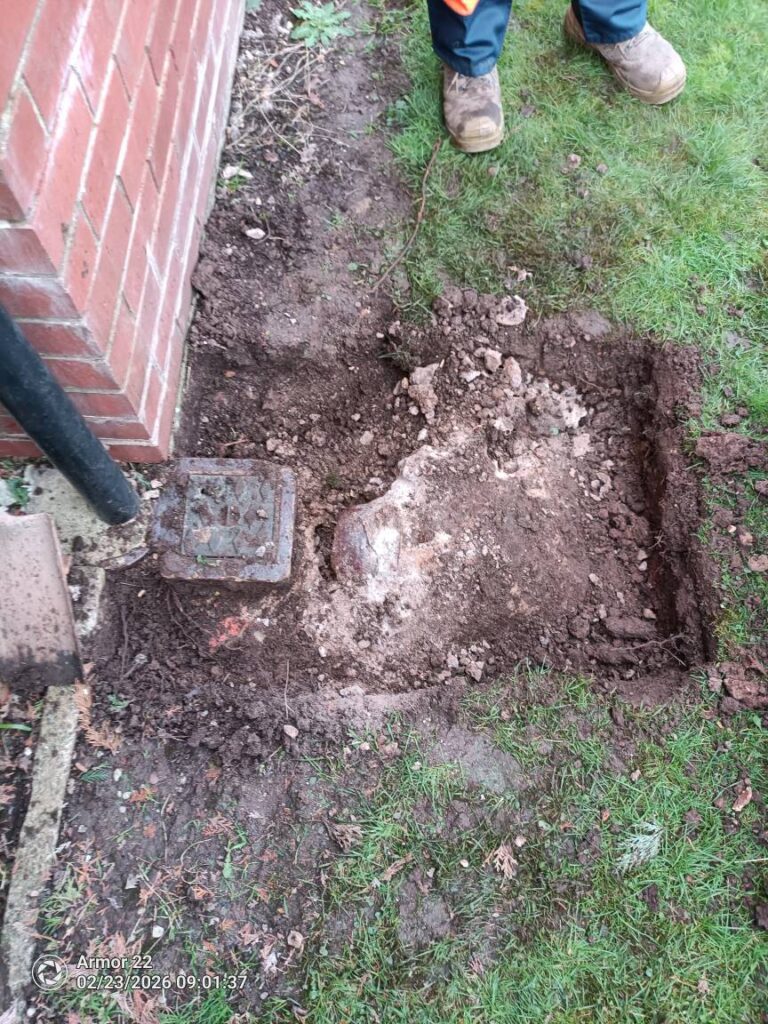
Nottingham engineers attended site after carrying out a CCTV survey, which showed damage and root ingress within the surface water line serving the property. The resident has also reported damp issues inside the home, making a thorough investigation essential.
Using high-pressure water jetting (HPWJ), debris inside the line was cleared in order to access the pipework more clearly.
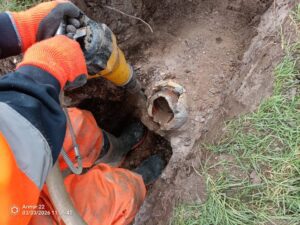
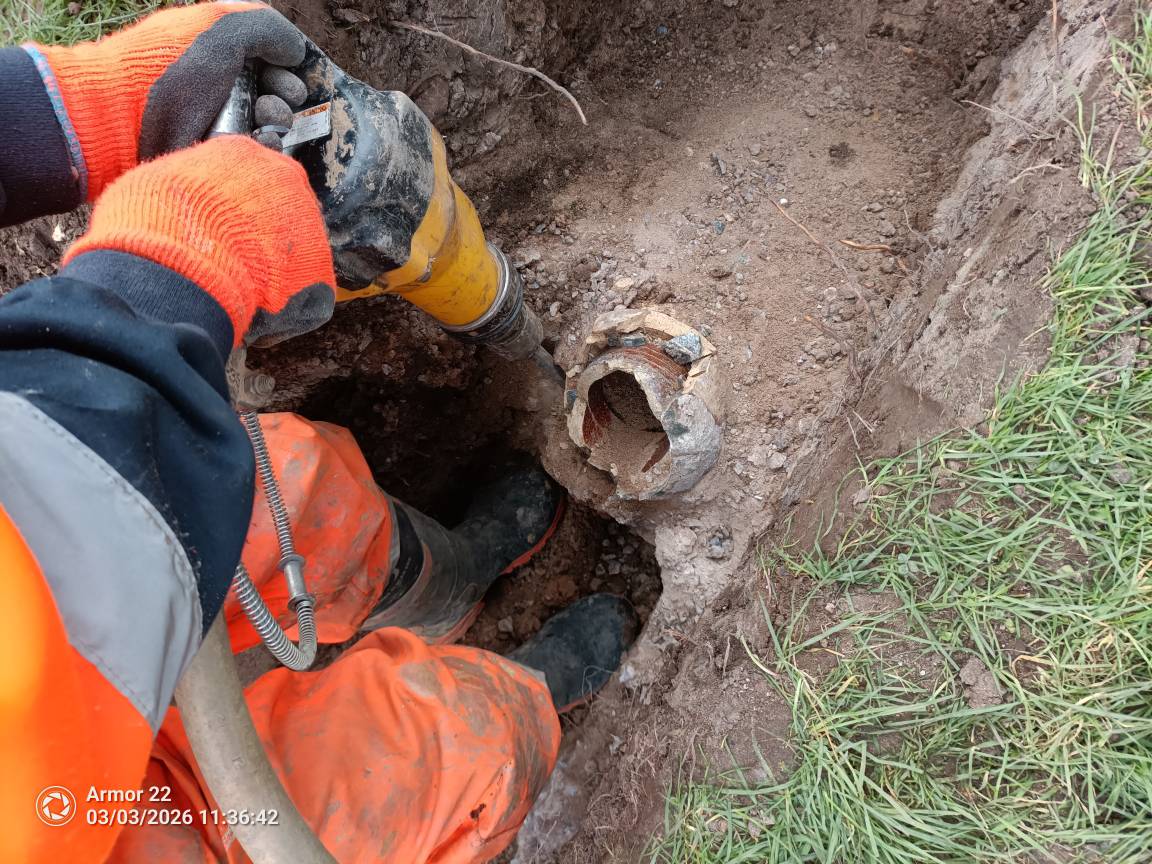
However, when the team attempted to carry out a further CCTV inspection from the surface water manhole to the gully, they discovered the situation had worsened. The previously damaged section of pipe had now completely collapsed, and concrete had entered the line, preventing access.
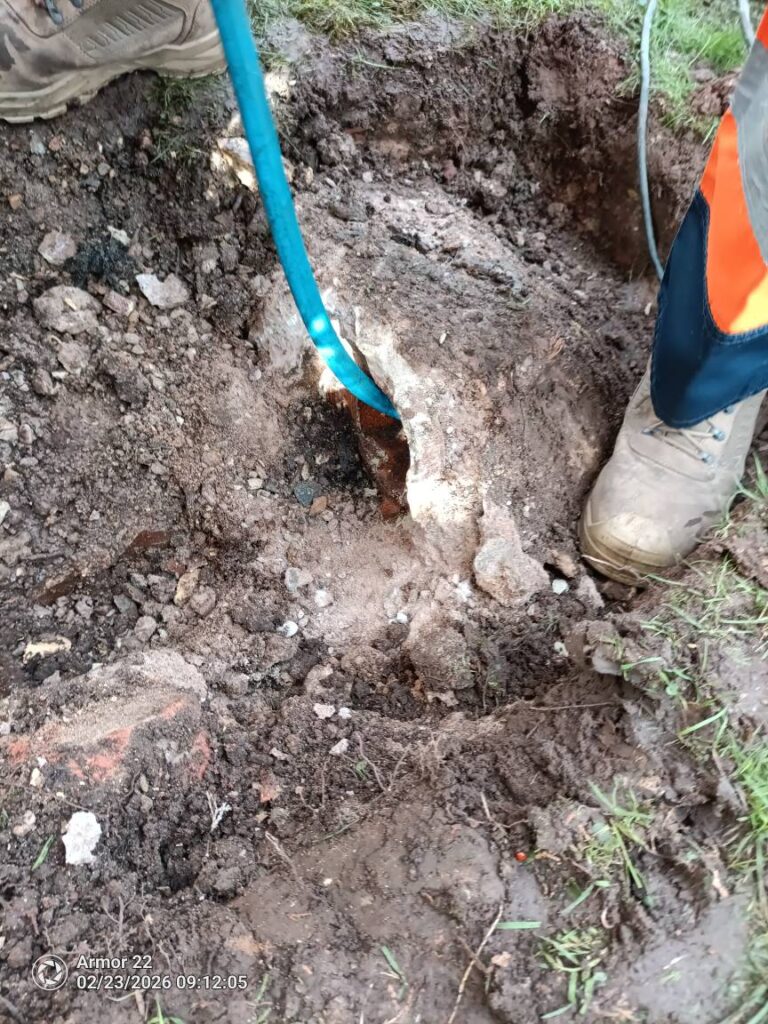
To investigate further, engineers carefully broke out the gully and carried out another CCTV survey from a different connection point. This confirmed the collapsed section of pipe and highlighted multiple defects along the run.
 Deciding on a Long-Term Solution
Both gullies required excavation and replacement, and the affected pipework sat at a depth of around 1.6 metres. This depth, combined with access limitations and safety considerations, meant multiple patch repairs would have been disruptive and inefficient.
Instead, the team recommended replacing the entire surface water line from the front to the rear of the property.
A temporary gully was installed while the client reviewed the findings and approved the recommended works.
Excavation Challenges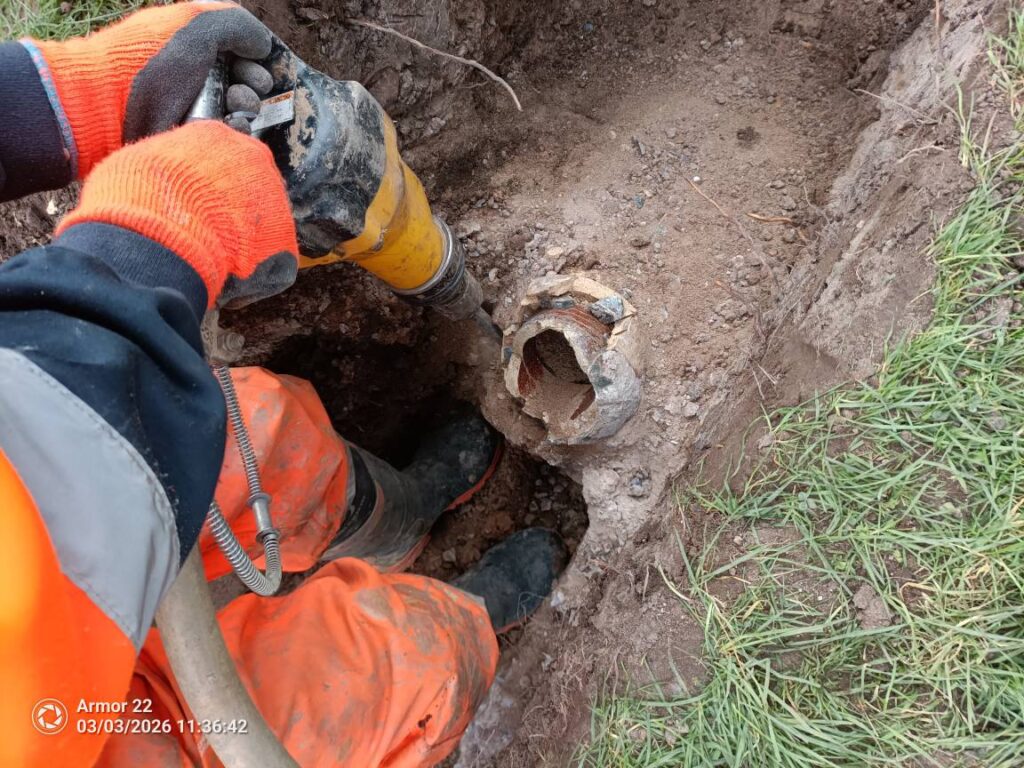
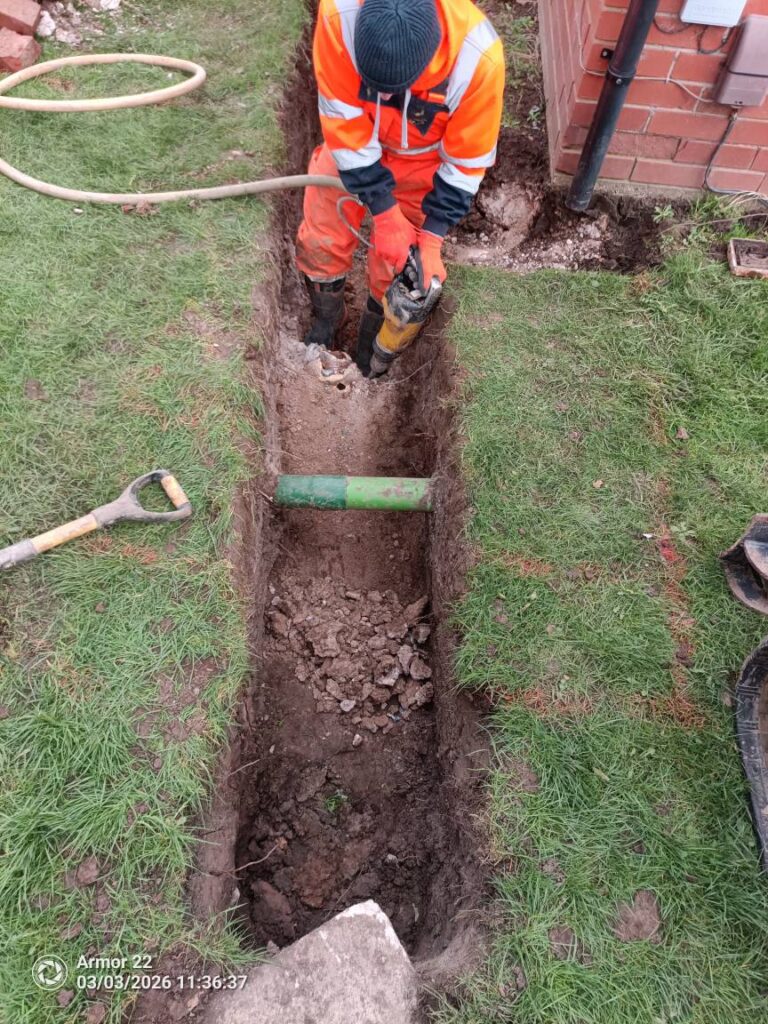
Once approval was received, work began with the excavation of the front gully and a 10 metre trench running towards the rear of the property.
During excavation it became clear that the area contained reinforced concrete, which proved extremely difficult to break through.
To continue safely and efficiently, the team arranged for specialist equipment, including a two-tool compressor and CP9 breaker. While waiting for the equipment to arrive, other preparation works on site continued.
The following day, engineers used the CP9 breaker to remove the reinforced concrete. This process took most of the day due to the strength and thickness of the material.
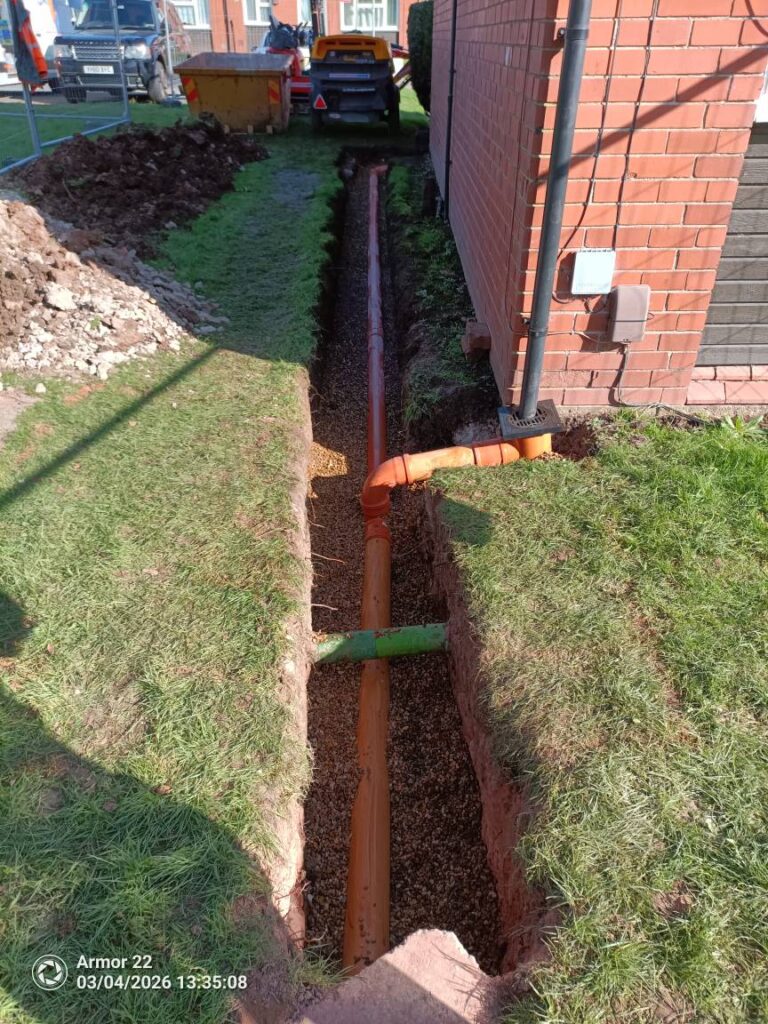
Once cleared, the trench was levelled and the team began installing the new pipework connecting the gullies.
Installing the New Drainage System
Work then moved to modifying an existing surface water manhole for the new drainage run.
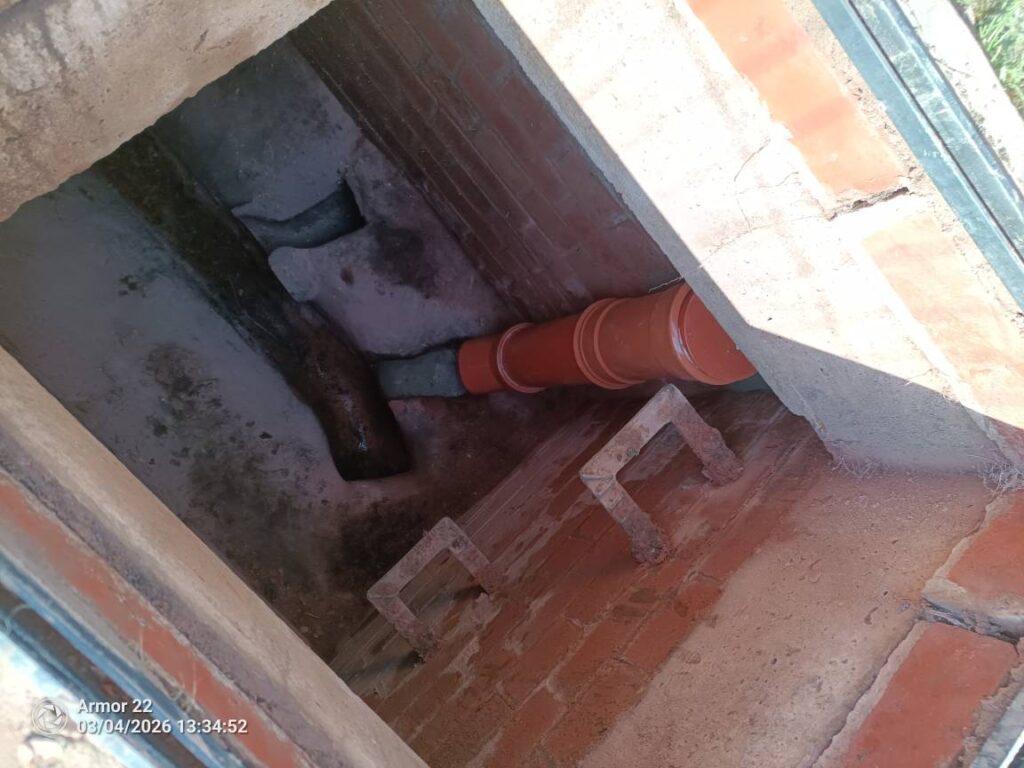
The team carefully broke through the brick wall of the manhole chamber to create a new outfall opening for the incoming 4-inch pipe at the correct level.
Inside the manhole, engineers installed a drop shaft complete with rod eye access through a vertical “T” junction. The pipework was reconnected at the benching level using a 45-degree bend to ensure correct flow direction.
The redundant lateral pipe from the old drainage line was filled and sealed to prevent rodent access and to eliminate unnecessary connections.
Once the new pipe was in place, it was securely cemented through the manhole wall, both internally and externally, to ensure a watertight installation.
All levels and pipe gradients were carefully checked before the system was bedded in gravel and the
trench partially backfilled.
Final Backfilling and Site Restoration
On the final day, the team continued backfilling the trench and compacting the ground using an excavator to ensure long term stability.
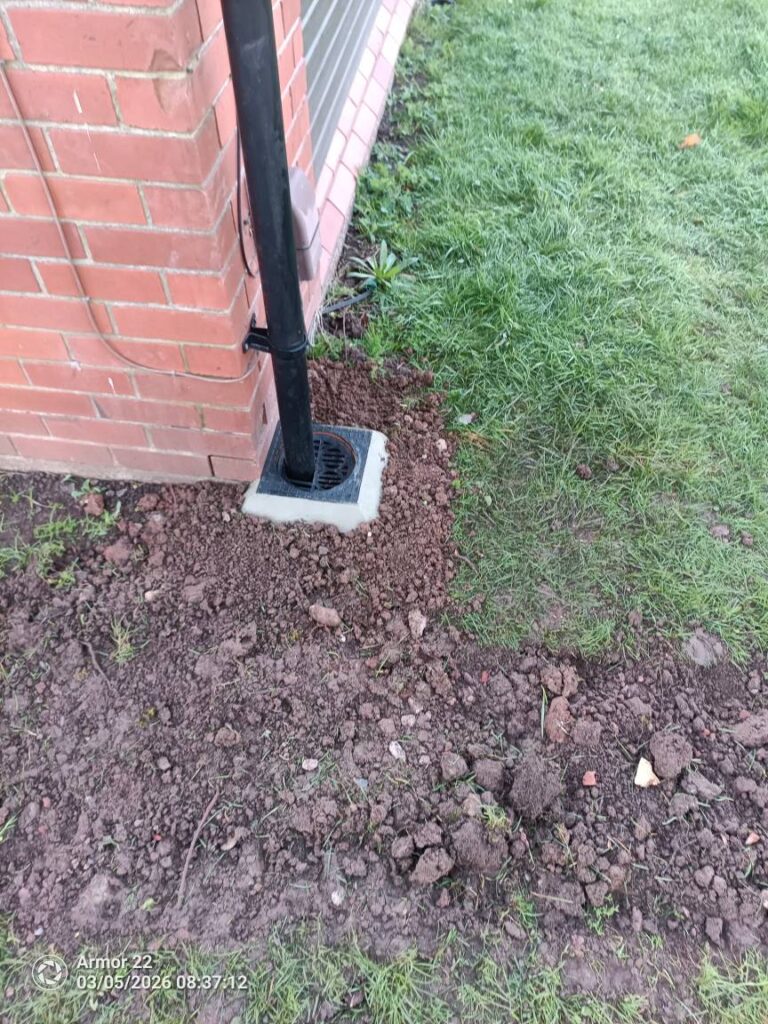
Concrete was installed around both the front and rear gullies to secure them permanently into position.
The entire excavation area was compacted to prevent future ground movement.
To complete the project, engineers reinstated the surface with topsoil, reseeded the grassed area, and watered the site to encourage regrowth.
A Complete Solution
Although the project became more extensive than originally expected, replacing the full drainage run ensures a long-term solution for the property.
The new system removes the risk of further collapse, prevents root ingress, and restores reliable drainage for the resident.
By adapting the scope of the project as new findings emerged, DALROD Nottingham delivered a safe, durable, and effective repair despite facing several unexpected challenges.
 Why CCTV Drainage Surveys Matter
Drainage issues often develop out of sight, which means problems like those discovered in this project can go unnoticed until significant damage has occurred. CCTV surveys are one of the most effective ways to identify issues early and understand the true condition of your pipework.
Warning signs such as persistent blockages, slow drainage, foul odours, or areas of sinking ground should never be ignored. These symptoms can indicate damage or structural collapse within the system.
Across the DALROD network, our specialist engineers use CCTV technology to diagnose problems quickly and accurately. Once identified, a range of repair methods can be used depending on the severity and location of the damage.
Solutions may include high-pressure water jetting to remove roots and debris, structural patch lining, full drain lining, localised excavation, or complete pipe replacement where necessary.
If you’re experiencing ongoing drainage issues or simply want peace of mind about the condition of your pipework, call DALROD today to arrange a CCTV survey or discuss repair options.
Our experienced engineers can identify the problem quickly and recommend the most effective long-term solution for your property.